
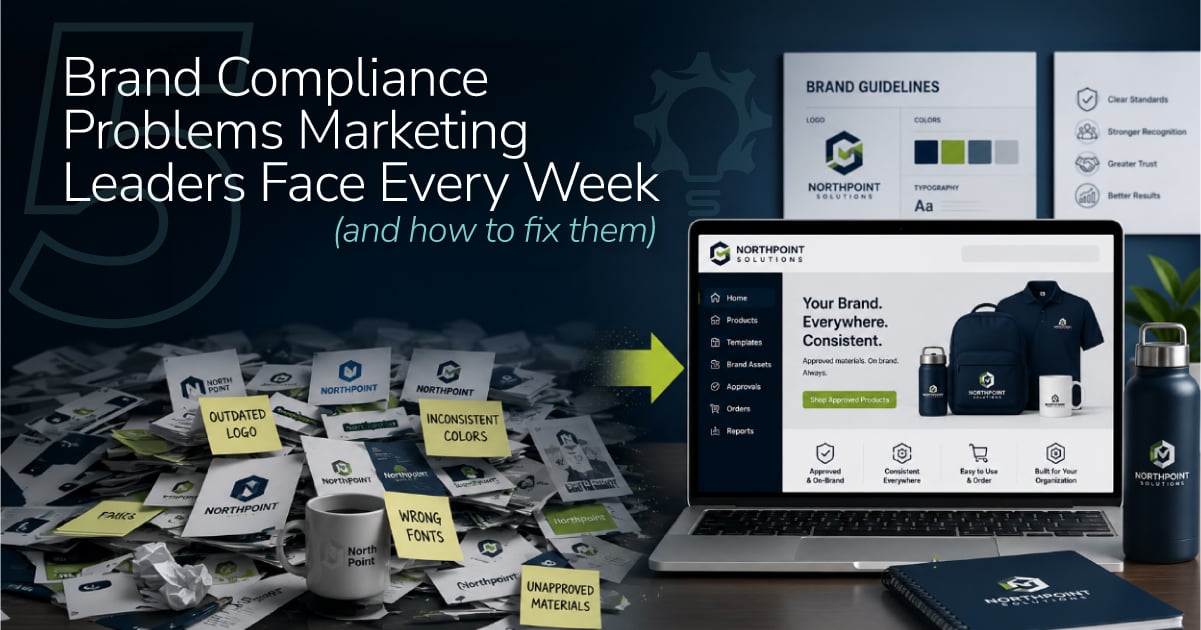
Why Brand Compliance Matters More Than Most Organizations Realize
Most organizations invest heavily in developing their brand. They spend months creating logos, messaging, visual identities, and comprehensive brand guidelines. Marketing teams work hard to establish a clear market position. Leadership teams understand that a strong brand creates trust, recognition, and long-term value.
Yet despite these efforts, many organizations struggle with one critical challenge: Brand Compliance.
After more than 30 years in the marketing and brand execution industry, I have discovered that maintaining brand compliance is often far more difficult than creating a brand in the first place.
The problem is rarely a lack of effort. Most employees genuinely want to follow brand guidelines and represent the organization appropriately. The challenge is that as organizations grow, maintaining brand consistency becomes increasingly complex. Multiple locations, decentralized teams, outside vendors, evolving assets, and competing priorities can quickly create brand management challenges that undermine even the strongest brands.
The result?
-
Inconsistent messaging.
-
Inconsistent visuals.
-
Inconsistent customer experiences.
-
And ultimately, weakened brand equity.
Below are five of the most common brand compliance problems we encounter every week and how organizations can address them through stronger brand governance and better systems.
1. Employees Create Their Own Marketing Materials
The Problem:
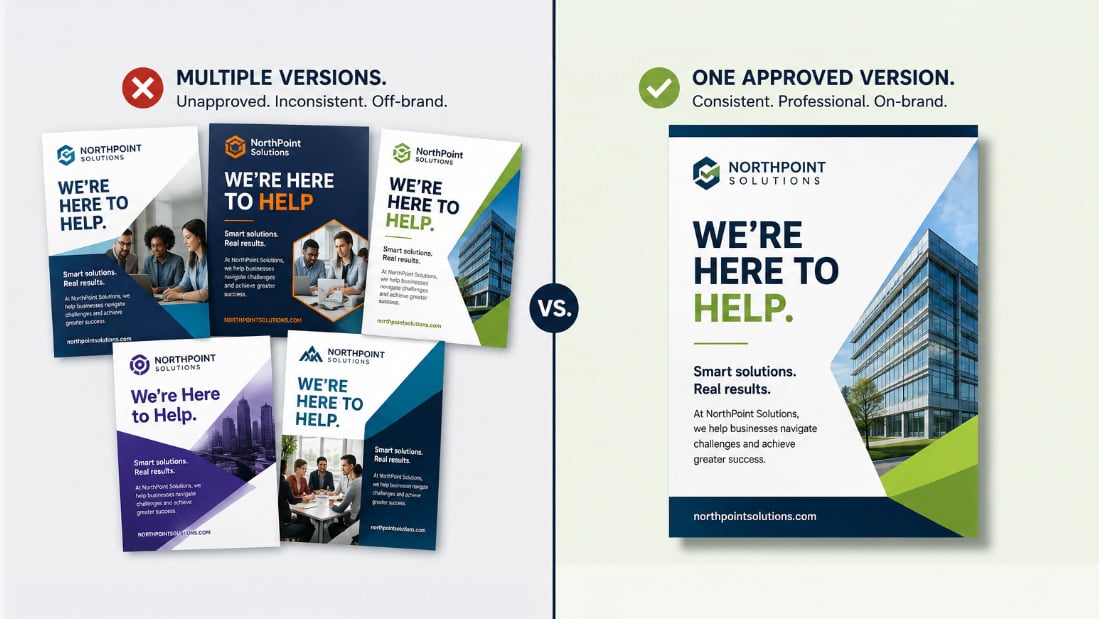
One of the most common brand compliance issues occurs when employees create their own marketing materials rather than using approved resources.
A salesperson needs a flyer. A branch manager needs recruiting materials. A department needs signage for an event. Instead of accessing approved assets (or calling marketing for assistance), they build something themselves.
Unfortunately, these materials often fail to follow established brand guidelines. Fonts are substituted. Colors are incorrect. Logos are stretched or outdated.
Messaging differs from approved standards.
The Impact:
Every unapproved piece weakens brand consistency. Customers begin encountering multiple versions of the same brand, creating confusion and reducing trust.
What starts as a single flyer can quickly become hundreds of inconsistent touchpoints throughout an organization.
2. Outdated Logos Continue to Be Used
The Problem:
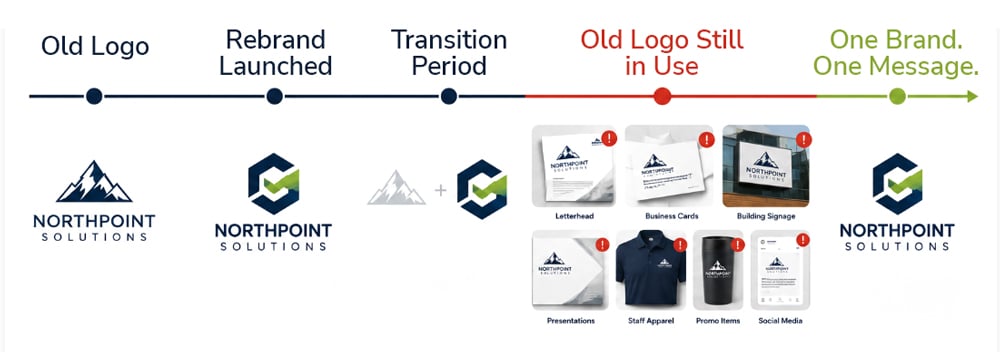
Organizations invest significant resources into rebranding initiatives, yet outdated logos often remain hidden throughout the organization.
Old files live on desktops.
Former vendors continue using archived artwork.
Employees save outdated assets locally.
Years later, multiple logo versions remain in circulation.
The Impact:
This creates a significant brand management challenge. Customers see inconsistent visual identities. Marketing investments lose effectiveness. The organization's brand governance efforts begin to break down.
Even the best rebranding strategy cannot succeed if outdated assets remain accessible.
3. Vendors Don't Understand Your Brand Guidelines
The Problem:
Most vendors are experts in producing products. Far fewer are experts in your specific brand guidelines. Without proper oversight, vendors may unintentionally:
- Adjust colors
- Alter logo spacing
- Modify layouts
- Use incorrect materials
- Substitute approved specifications
These changes may seem minor individually but collectively create brand compliance issues.
The Impact:
Brand consistency suffers. Marketing teams spend time reviewing and correcting mistakes. Projects require costly reprints. Customers experience inconsistent representations of the brand.
Strong brand management requires more than selecting a vendor—it requires ensuring every partner understands and follows established brand guidelines.
4. Multiple Locations Create Multiple Versions of the Brand
The Problem:
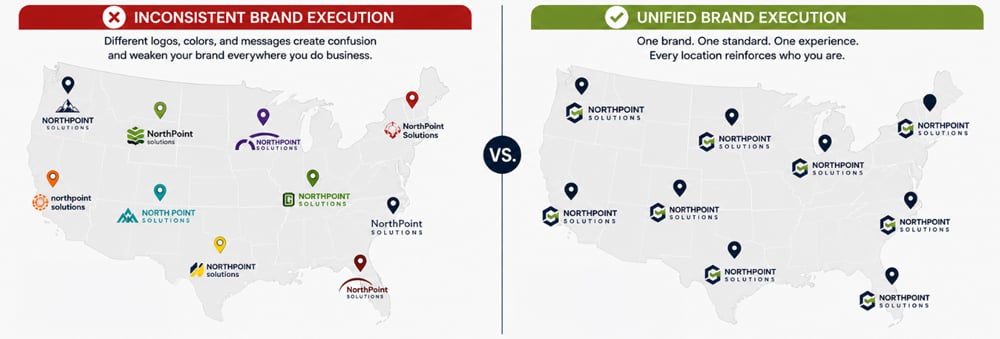
Organizations with multiple locations often face unique brand governance challenges.
Local teams need flexibility to support:
- Recruiting efforts
- Community events
- Sponsorships
- Regional marketing initiatives
Without centralized brand management systems, each location begins creating its own version of the brand experience.
The Impact:
Customers no longer experience a consistent brand. A customer in Charlotte may see one version of the brand while a customer in Dallas sees another.
Over time, this lack of brand consistency erodes trust and weakens the overall brand.
The larger an organization becomes, the more important effective brand governance becomes.
5. Employees Can't Find Approved Assets
The Problem:
This may be the single biggest brand compliance challenge organizations face. Employees want to follow brand guidelines. They simply cannot find what they need.
They don't know:
- Which logo is approved
- Which template is current
- Which materials are authorized
- Which vendor should be used
When deadlines arise, employees often create their own solutions.
The Impact:
Brand compliance declines. Brand consistency suffers. Productivity decreases. Rogue spending increases.
The reality is simple: If approved resources are difficult to find, employees will create alternatives.
Bonus Problem: Marketing Teams Become the Brand Police
The Problem:
As brand compliance issues increase, marketing teams often become responsible for reviewing and approving everything.
Every flyer. Every logo request. Every apparel order. Every marketing piece.
Instead of focusing on strategy, growth, and innovation, they spend their time enforcing compliance.
The Impact:
Marketing becomes a bottleneck. Projects slow down. Employees become frustrated. Brand governance becomes dependent upon manual oversight.
This is rarely sustainable for growing organizations.
The Real Problem Isn't Brand Compliance, It's Brand Accessibility
One of the biggest misconceptions about brand compliance is that organizations need stricter enforcement. In our experience, most organizations don't have a brand compliance problem. They have a brand accessibility problem.
People generally want to follow brand guidelines. They want to represent the organization correctly.
What they need are systems that make compliance simple.
The organizations that achieve the highest levels of brand consistency are not necessarily those with the largest brand standards manuals.
They are the organizations that make approved assets easy to find, easy to customize, and easy to order.
That is the foundation of effective brand governance.
How Symphonix Helps Organizations Improve Brand Compliance
At Symphonix, we help organizations move from reactive brand management to proactive brand governance.
Our goal is simple: Make it easier for employees, locations, and partners to follow brand guidelines while maintaining the flexibility needed to operate efficiently.
We help organizations strengthen brand compliance through:
- Online Company Stores: A centralized destination for approved print materials, apparel, promotional merchandise, signage, and marketing assets.
- Role-Based Access: Users only see the products, brands, templates, and resources approved for their specific role.
- Dynamic Templates: Allow local customization while protecting brand guidelines and maintaining brand consistency.
- Approval Workflows: Provide oversight without creating bottlenecks.
- Brand Governance Programs: Establish scalable processes that help organizations maintain compliance as they grow.
Print, Promotional Merchandise, Apparel, and Fulfillment Management: Ensure every customer-facing touchpoint reflects the brand accurately and consistently.
Final Thoughts
Strong brands are not built through occasional moments of excellence. They are built through consistent execution over time. Every sign, every flyer, every piece of apparel, every marketing campaign, and every customer interaction either strengthens or weakens your brand.
Brand compliance is not about creating more rules.
Brand governance is not about policing employees.
Effective brand management is about creating systems that make the right choice the easiest choice.
Organizations that invest in brand consistency create stronger customer experiences, improve operational efficiency, and build more valuable brands over time. If your organization is struggling with brand compliance, Symphonix can help you create the tools, processes, and systems necessary to transform brand chaos into brand consistency.

Ready to Stop Managing Brand Chaos?
Brand compliance doesn't happen by accident. It happens when organizations combine clear brand guidelines with the right technology, processes, and partners.
Schedule a complimentary Brand Compliance Review with Symphonix and learn how leading organizations are using online company stores, approval workflows, and centralized brand management systems to create a more consistent customer experience.
One conversation could uncover opportunities to strengthen your brand, save time, and reduce unnecessary costs.
FAQ: Frequently Asked Questions About Brand Compliance
 ·
·
Andy is a Managing Partner at Symphonix, and has spent more than two decades helping Marketing, HR, and Procurement teams drive brand compliance, operational efficiency, and measurable ROI with promotional product programs. He’s a sought-after speaker on branded merchandise strategy, marketing fulfillment, and last-mile execution.