Every December, Pantone drops a single color into the global design bloodstream, and marketers everywhere tend to politely nod, admire the shade, and most go back to work. But wait…the Color of the Year isn’t about paint chips. It’s about psychology. Culture. Timing. Taste.
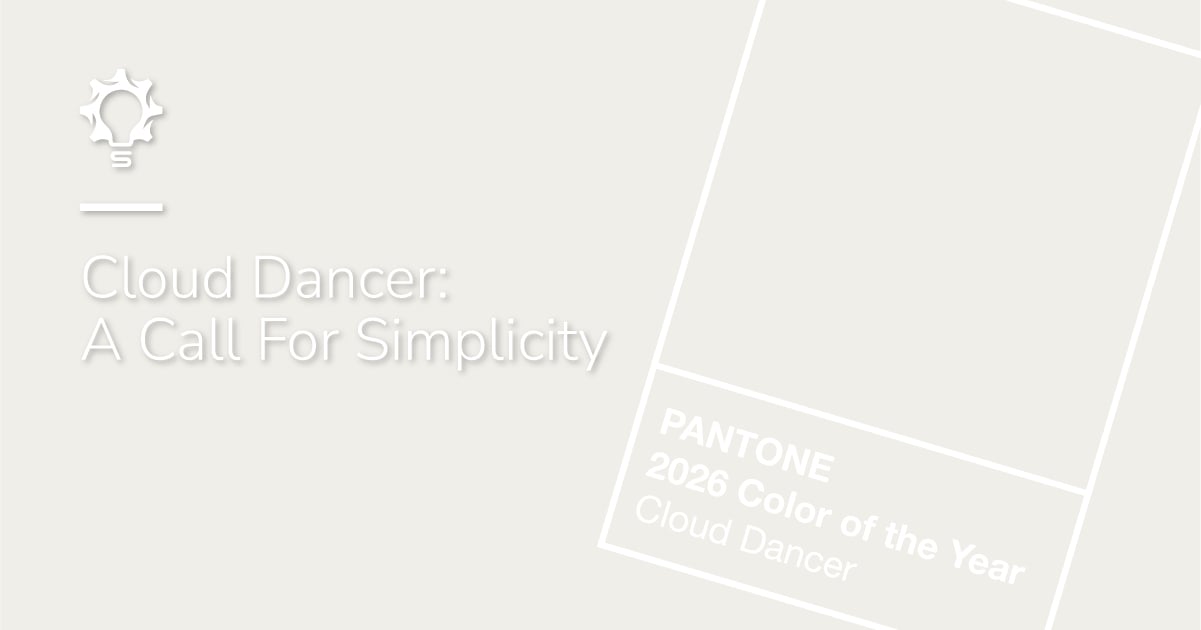
Pantone’s 2026 choice Cloud Dancer (Pantone 11-4201) did not arrive with a bang. It drifted in quietly. Soft. Airy. Subtle. And that’s exactly the point. If you’re a marketer, this wasn’t an announcement about color. It was a message about simplicity.
Pantone formally described Cloud Dancer as “a billowy white imbued with a feeling of serenity.”
(Imbued, for the record, means to permeate or inspire—which may be the most telling part of the entire press release.)
Cloud Dancer doesn’t demand attention. It allows space. And after a decade of sensory overload, relentless messaging, and digital clutter… that might be the boldest marketing move of all.
Pantone Didn’t Just Pick a Color. They Read the Room.
Before Pantone was a cultural authority, it was a practical one. In the 1960s, founder Lawrence Herbert recognized a massive problem: no one could agree what “blue” was. Printers, designers, and manufacturers were speaking in different languages—costing time, money, and consistency.
Pantone created a universal color language.
Then, in 2000, Pantone did something brilliant. They stopped documenting color, and began interpreting culture.
The first “Color of the Year” reframed Pantone from technical authority into emotional translator. Every year thereafter, the selected color became a reflection of the global mood:
- Confidence
- Fear
- Rebellion
- Healing
- Hope
And in 2026, when Pantone could have gone bold, bright, or electric…They went nearly invisible. That’s not an accident. That’s a diagnosis.

Pantone Color of the Year 2000-2026
Cloud Dancer Is a Signal That Marketing Has Become Too Loud
Cloud Dancer didn’t appear in a vacuum. It’s a reaction to a decade defined by:
- Over-designed experiences
- Overloaded inboxes
- Over-engineered messaging
- Overstimulated audiences
- Overconfident brand voices
Marketers and automation made things brighter. Faster. Louder. But our buyers didn’t ask for more. They asked for less. Cloud Dancer says what customers won’t: “Please, make this easier.”
It reflects a collective craving for:
- Calm over chaos
- Clean over clutter
- Clarity over cleverness
- Purpose over performance
- Quiet confidence over constant noise
This isn’t a trend. This is exhaustion. Buyers are tired. Decision-makers are tired. Inbox filters are tired. And brands that continue shouting will simply disappear into the noise they helped create.
What Marketers Should Do With This (Besides Admire It)
This is where Pantone stops being interesting…and becomes useful. Cloud Dancer is not telling you to repaint your logo. It’s telling you to simplify your entire marketing ecosystem.
Here’s how you might execute against that signal.
The Marketer’s Playbook: 5 Ways to Use Cloud Dancer the Right Way
1. Use the Color as a Mood, Not a Decoration
Cloud Dancer isn’t a design trick. It’s a tone. Apply it through:
- More white space in layouts
- Slower, calmer visual rhythms
- Lighter compositions
- Fewer distractions
If your brand feels easier to breathe in—you’re doing it right.
2. Let It Influence Physical Environments First
Cloud Dancer lives best where customers experience your brand. Think:
- Showrooms
- Offices
- Event booths
- Displays
- Packaging
- Merchandising
- Promotional Merchandise
Audiences want simpler spaces:
- Increase dwell time
- Improve memory recall
- Lower the emotional friction
Complex environments repel people. Calm environments invite them in.
3. Apply Simplicity Wherever Comfort Sells
Marketers should remember this: Our buyer is human. Simple design communicates:
- Safety
- Stability
- Confidence
- Competence
Use Cloud Dancer mindset in:
- Welcome kits
- Apparel accents
- Sales materials
- Signage
- Onboarding collateral
In a world of sensory overload, simplicity feels premium.
4. Sell the Philosophy, Not the Shade
Our audiences do not care about Pantone. They care about:
- Intent
- Taste
- Trust
- Leadership
Position Cloud Dancer as:
- A commitment to clarity
- A rejection of clutter
- A move toward restraint
- A brand that respects attention
Simplicity is not safe. It’s strong. It’s powerful. It’s needed.
5. Treat This as a Brand Audit Trigger
Ask the hard questions:

- Does our brand feel heavy?
- Are we visually overwhelming?
- Are we designing for clarity or complexity?
- Is our message working harder than it needs to?
If Cloud Dancer forces you to subtract and simplify…it’s doing its job.
Why This Matters More Than You Think
Color speaks before copy ever will.
Before your email opens…
Before your booth gets approached…
Before your website loads…
Your design already told a story. In 2026, it’s whispering: “Make this easier. Make this gentler. Make this human.”
In my humble opinion, the brands that listen will stand out by doing less.
Final Thought
The smartest marketers don’t copy color. They translate meaning. Cloud Dancer isn’t telling you to redesign. It’s telling us to simplify. And that may be the most disruptive instruction marketing has received in years.
The world is really noisy and the truth is hard to come by. Our audiences need simplicity in 2026.

Let's Connect
When brand execution feels complicated, it doesn’t have to be. Symphonix’s Creative Services team can bring clarity, simplicity, and confidence to your initiatives.
FAQs About Pantone and Color of the Year
| Year | Color | Description |
|---|---|---|
| 2000 | Cerulean Blue | A calm, confident blue that ushered in a sense of stability and optimism at the turn of the millennium. |
| 2001 | Fuchsia Rose | A vibrant pink symbolizing energy, emotion, and bold self-expression. |
| 2002 | True Red | A powerful red representing confidence, passion, and resilience after global uncertainty. |
| 2003 | Aqua Sky | A soothing blend of blue and green reflecting serenity and healing. |
| 2004 | Tigerlily | A warm, adventurous orange expressing escapism and courage. |
| 2005 | Blue Turquoise | A tropical escape hue that symbolized refreshment and emotional balance. |
| 2006 | Sand Dollar | A neutral beige that focused on calm, comfort, and natural simplicity. |
| 2007 | Chili Pepper | A spicy, attention-getting red representing confidence and boldness. |
| 2008 | Blue Iris | A blend of blue and violet expressing creativity, mystery, and trust. |
| 2009 | Mimosa | A cheerful yellow chosen to lift spirits during economic recession. |
| 2010 | Turquoise | A tropical blue-green that evoked escapism and emotional balance. |
| 2011 | Honeysuckle | A bold pink representing hope, vitality, and emotional energy. |
| 2012 | Tangerine Tango | A vibrant orange about optimism, movement, and revitalization. |
| 2013 | Emerald | A luxurious green tied to growth, prosperity, and harmony. |
| 2014 | Radiant Orchid | A purple-pink hybrid reflecting creativity and individuality. |
| 2015 | Marsala | A rich wine red bringing warmth, sophistication, and earthiness. |
| 2016 | Rose Quartz & Serenity | A dual choice symbolizing balance between warmth and coolness in a complex world. |
| 2017 | Greenery | A fresh yellow-green celebrating renewal and connection to nature. |
| 2018 | Ultra Violet | A dramatic purple signaling imagination, spirituality, and vision. |
| 2019 | Living Coral | A lively coral tone expressing connection, warmth, and optimism. |
| 2020 | Classic Blue | A reassuring blue chosen for stability during global disruption. |
| 2021 | Illuminating & Ultimate Gray | A dual selection of resilience (gray) and hope (yellow). |
| 2022 | Very Peri | A blue-violet hybrid representing transformation and digital evolution. |
| 2023 | Viva Magenta | A bold crimson celebrating strength, creativity, and self-expression. |
| 2024 | Peach Fuzz | A soft peach tone emphasizing tenderness, comfort, and belonging. |
| 2025 | Mocha Mousse | A warm brown evoking indulgence, grounding, and emotional richness. |
| 2026 | Cloud Dancer | An airy off-white reflecting simplicity, calm, and emotional lightness in a noisy world. |
 ·
·
Andy is a Managing Partner at Symphonix, and has spent more than two decades helping Marketing, HR, and Procurement teams drive brand compliance, operational efficiency, and measurable ROI with promotional product programs. He’s a sought-after speaker on branded merchandise strategy, marketing fulfillment, and last-mile execution.