
A Program HR Can Run Without a Full-Time Manager
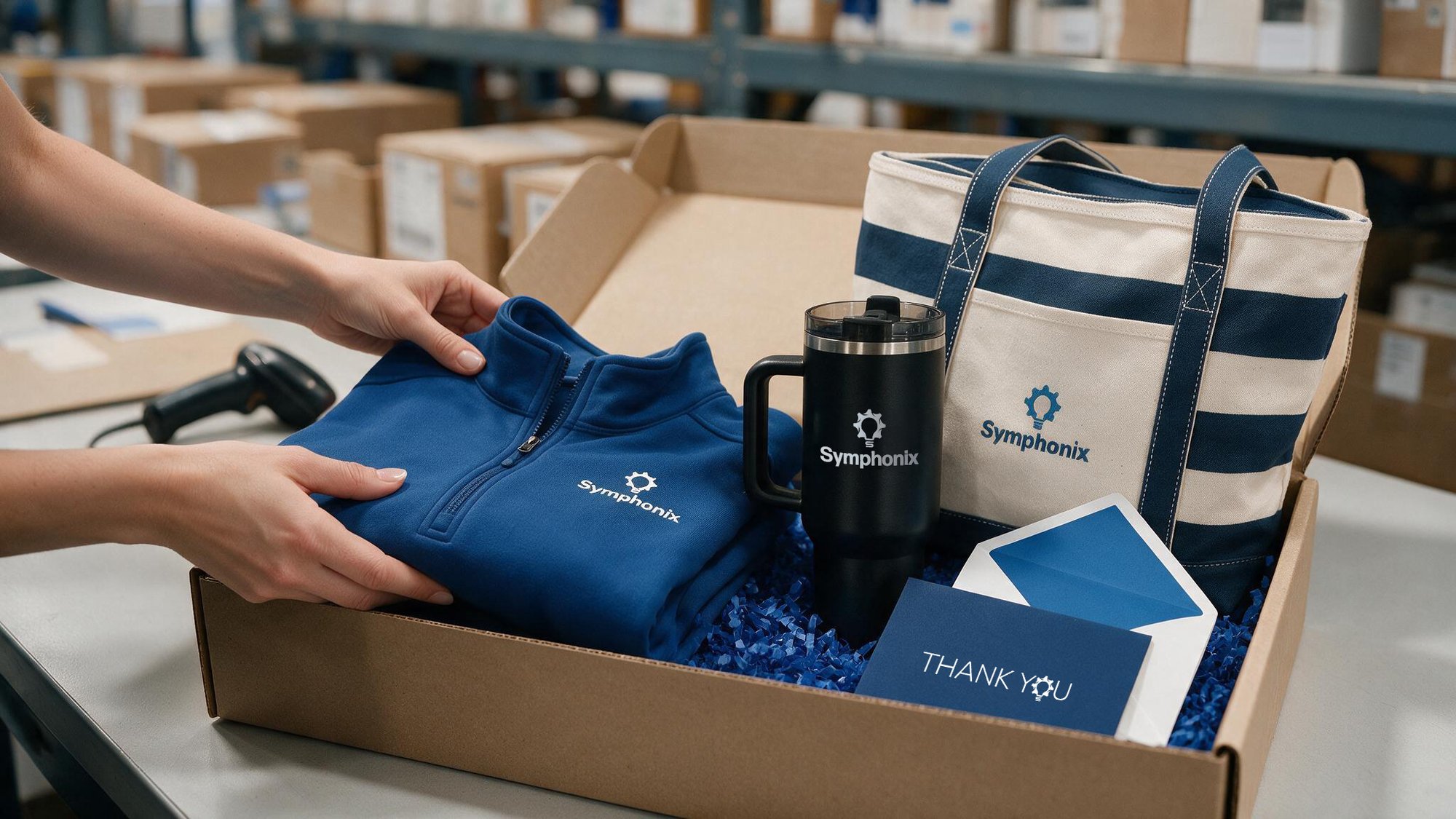
Employee appreciation gifts should feel like genuine recognition, not generic merchandise handed out at the end of the year. Symphonix helps organizations create useful, thoughtfully presented gift options while maintaining a consistent budget and experience across the workforce.
An employee gift may be opened at home, shared with family members, worn on the weekend, or used for years. That continued use gives the gift value beyond the moment it's received. It also makes the gift a reflection of the organization that selected it.
That's why employee appreciation gifts require more than choosing a product and adding a logo. The gift should feel appropriate, useful, fair, and sincere. It should account for different preferences, sizes, diets, locations, and lifestyles without making the program difficult for HR or Marketing to manage.
The amount spent is one variable, but it isn't the only measure of value. A successful employee gifting program depends just as much on the thought behind the selection, the quality of the products, the fairness of the program, the message that accompanies the gift, and whether everything arrives when promised.
Contents (Click to Scroll):
What Employee Appreciation Gifts Say About the Organization
A thoughtful employee gift communicates something important: “We appreciate what you contribute.”
A generic or poorly managed gift may communicate something very different: “We needed to send everyone something.”
The difference isn't necessarily the budget. A modest gift that's useful, well presented, and accompanied by a sincere message may create more appreciation than an expensive item employees don't want or can't use.
The best employee appreciation gifts can help an organization:
- Thank employees for their contributions
- Reinforce a shared sense of belonging
- Recognize a demanding or successful year
- Celebrate a company milestone
- Connect employees across offices and locations
- Create a positive experience outside the daily work routine
A gift can support a culture of recognition, but it shouldn't be expected to create that culture by itself. A holiday gift doesn't replace fair compensation, appropriate benefits, good management, or recognition throughout the year. It should complement those efforts, never stand in for them.
Why Generic Employee Gifts Miss the Mark
One product rarely works equally well for every employee. People have different interests, body types, dietary restrictions, family circumstances, work environments, and preferences. An item that feels valuable to one employee may be irrelevant to another.
Common employee-gifting mistakes include:
- Selecting a product based on novelty rather than usefulness
- Applying a logo so prominently that employees won't use the item
- Offering apparel without sufficient sizes or styles
- Sending food without dietary alternatives
- Assuming every employee celebrates the same holiday
- Giving different employee groups noticeably different values
- Excluding remote employees from an office-based experience
- Collecting addresses and preferences through an unsecured spreadsheet
- Waiting too long and settling for limited inventory
Good employee gifting isn't about knowing exactly what every person wants. It's about acknowledging that employees are individuals, which may mean offering a small collection of gifts, allowing employees to select size or color, or including food and non-food alternatives.
The goal isn't infinite choice. It's enough choice that each person is likely to receive something useful.
How Much Should You Spend on Employee Appreciation Gifts?
There's no universally correct budget for employee appreciation gifts. The appropriate amount depends on the organization's resources, the size of the workforce, the desired experience, and the complete cost of delivering the program. A successful gift isn't determined by whether the organization spends $50, $100, or $200 per employee. More expensive isn't automatically more meaningful.
What matters is how the available budget is used.
The product price is only one part of the total.
Two organizations can spend the same amount per employee and create very different experiences. One may choose several inexpensive items and apply prominent branding. The other may select one high-quality item, use restrained decoration, and include a meaningful note. The second program may feel considerably more valuable even though the budgets are identical.
A complete employee gifting budget may include:
- The product
- Decoration or personalization
- Packaging
- Printed messages or inserts
- Employee selection technology
- Kitting and assembly
- Individual fulfillment
- Shipping
- Replacement inventory
- Program support
Budget, Value, and the Employee Experience
When setting the budget, HR, Marketing, and executive leadership should agree on what the investment needs to accomplish.
Ask:
- Should the gift feel practical, premium, celebratory, or personal?
- Will employees receive one item or choose among several?
- Does the budget include shipping to individual homes?
- Will packaging be customized?
- Are remote employees included?
- Will apparel sizes or dietary options be needed?
- Does the organization need replacement inventory?
- Are there additional fulfillment costs for different locations?
Evaluate the budget as an all-in program cost rather than a product-only price.
A lower unit price may become less attractive after setup fees, packaging, individual shipping, and fulfillment are added. A transparent proposal should identify those costs early. The goal isn't the cheapest product. It's the strongest experience the approved budget can support.
Give Employees a Choice Without Losing Consistency
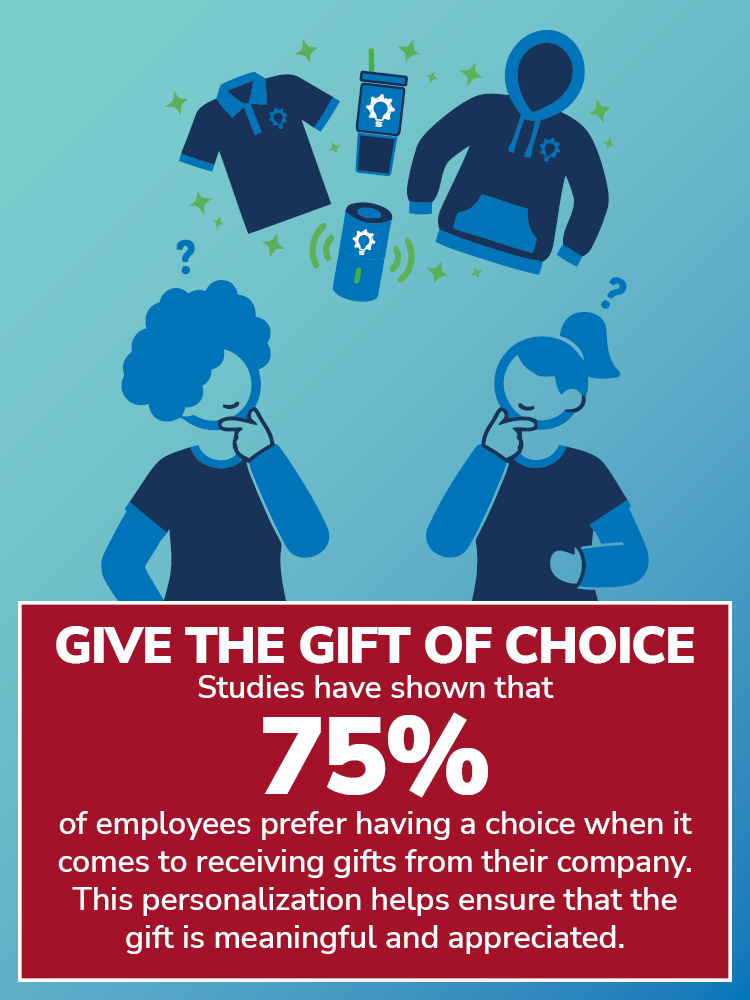
Choice can make an employee gift more useful and inclusive. Research has found that people often appreciate gifts they requested more than unsolicited alternatives. It makes sense: recipients know what they'll use.
However, employee choice should still feel intentional. Sending employees into a massive rewards catalog can make the experience feel like a transaction. It places the selection burden entirely on them and does little to communicate why the company chose to recognize them.
A curated choice program offers a better balance.
The organization approves a focused collection of products that fit its budget and quality standards. Employees then choose the option that best fits their preferences.
A collection might include:
- Premium apparel
- A travel or everyday bag
- A home or lifestyle product
- A technology accessory
- A food gift with dietary alternatives
- A wellness or outdoor product
Employees may also select:
- Size
- Color
- Food or non-food preference
- Home or office delivery
- An approved alternative
This approach lets employees make a meaningful choice while the organization maintains a consistent value and experience.
The company can also explain the thought behind the selection: “We chose these gifts for their quality, usefulness, and ability to be enjoyed outside the workplace. Please select the one that best fits your life.” That explanation matters. It shows employees that the collection was curated rather than assembled at random.
Employee Recognition for More Than the Holidays
Employee recognition doesn't have to be limited to December. The same gifting process can support:
- Employee onboarding
- Service anniversaries
- Company milestones
- Promotions
- Retirement
- Safety achievements
- Sales meetings
- Leadership events
- Remote-team gatherings
- Mergers and acquisitions
- Employee appreciation events
- Major project completions
The gift should fit the moment. An onboarding kit may help a new employee feel connected and prepared. A service-anniversary gift should recognize the significance of the milestone. An event gift may reinforce a shared experience. A year-end gift may communicate broad appreciation across the organization. Different moments call for different messages, products, and delivery methods, but the common thread should always be a clear reason for the gift.

Coordinating Employee Gifting Across HR, Marketing, and Leadership
Employee gifting often involves several teams. HR understands the workforce, recognition goals, eligibility rules, and employee considerations. Marketing protects the brand and manages product presentation. Executives establish the budget, approve the program, and communicate the organization's appreciation.
Without clear ownership, the work can become fragmented. One person selects products. Another maintains employee lists. Someone else collects addresses. Marketing reviews artwork late in the process. Payroll learns about the gift after it's already been announced.
A coordinated program establishes responsibilities early.
Human Resources
HR should help determine:
- The recognition purpose
- Employee eligibility
- Fair and consistent values
- Inclusion requirements
- How new hires and employees on leave will participate
- Whether gift cards require payroll review
- How employee information will be protected
- Who will answer employee questions
Marketing
Marketing should guide:
- Product presentation
- Brand standards
- Logo treatment
- Packaging
- Employee-facing messages
- Selection-page design
- The overall experience
Executive Leadership
Executives should provide:
- Budget approval
- Visible support for the program
- A clear expression of appreciation
- Alignment with company values
- Timely decisions
One Program Owner
Even when several departments contribute, one person or partner should own the full timeline, coordinating product selection, pricing, inventory, artwork, approvals, employee information, production, packaging, shipping, and reporting. Clear ownership reduces last-minute decisions and gives employees a consistent experience.
Keeping Employee Gifts On-Brand and Appropriate
Being on-brand doesn't mean placing the largest possible logo on every item. In many cases, limited or subtle branding improves the employee's willingness to use the gift and embrace it as a sincere expression of appreciation.
A premium jacket without a large corporate mark may be worn regularly. Add prominent branding, and the same jacket may become something the employee only wears at company events.
The gift should fit both sides of the experience:
-
It should feel like it came from the organization.
-
It should feel like it belongs to the employee.
Brand recognition can come through packaging, color, a personalized card, a custom insert, or a letter from leadership. The item itself can remain unbranded or carry a discreet mark.
Visible branding may make sense for a company anniversary, team event, or shared milestone, and some employees genuinely enjoy company-branded merchandise. The important point is to make branding an intentional decision, not an automatic requirement.
When in doubt, practical, well-made, and subtly branded usually provides more long-term value than heavily decorated merchandise.
Making the Program Inclusive
Employee populations include different religions, diets, abilities, sizes, lifestyles, and working arrangements. An inclusive program anticipates those differences without requiring employees to explain private circumstances.
Consider offering:
- Alcohol-free choices
- Allergen-aware food options
- Non-food alternatives
- Inclusive apparel sizes and styles
- Products suitable for different abilities
- Options for remote employees
- Home or office delivery
- A charitable alternative
- A dignified way to decline
Use inclusive year-end language when appropriate, and make sure participation feels voluntary. Employees shouldn't have to disclose a religious belief, medical condition, disability, or other personal information to a manager simply to receive an appropriate option. A well-designed selection process makes those alternatives a normal part of the program.
Protecting Employee Information
Employee gifting may require home addresses, phone numbers, apparel sizes, dietary preferences, or other personal information. That information should be collected carefully.
A secure process should:
- Collect only what is necessary
- Explain why the information is needed
- Restrict access to authorized people
- Identify any fulfillment partner receiving the information
- Allow employees to correct errors
- Define how long the information will be retained
- Avoid exposing one employee's information to another
Shared spreadsheets and long email chains create unnecessary risk. The selection experience should also work on mobile devices and be usable with assistive technology, with forms that contain clear instructions, labels, error messages, and confirmation that the information was received. The administrative process should be as respectful as the gift itself.

A Brief Note About Gift Cards and Tax Treatment
Gift cards can provide flexibility, but employers should consider potential payroll and tax implications. In the United States, cash and cash-equivalent benefits, including many gift cards, may be treated as taxable wages. Certain occasional noncash gifts may be treated differently depending on their value and the circumstances.
Tax treatment is outside the scope of this article.
Before announcing an employee gifting program, HR should consult the organization's payroll, accounting, or tax professionals. If a gift will affect an employee's pay statement, that should be explained clearly in advance.
On-Time Delivery: What the Holiday Calendar Actually Requires
The final carrier shipping date is not the last responsible ordering date.
Before an employee gift can ship, the program may require:
-
Budget approval
-
Product curation
-
Inventory confirmation
-
Artwork preparation
-
Sample or proof approval
-
Employee selection
-
Size and color collection
-
Address collection
-
Production and decoration
-
Kitting and packaging
-
Individual shipping
Each step needs time, and inventory also becomes less predictable as the holiday season approaches.
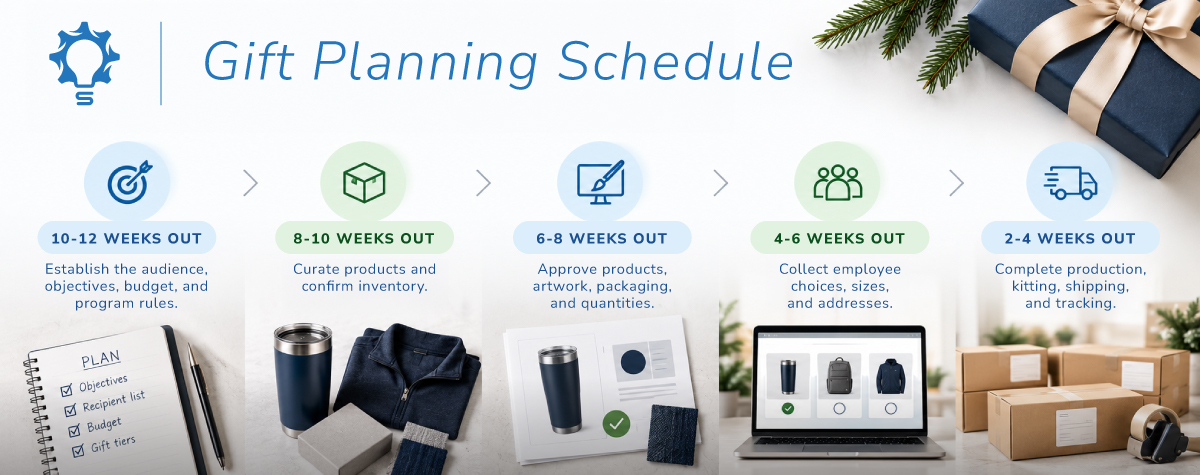
Most customized employee appreciation gift programs should begin eight to twelve weeks before the desired delivery date. Programs involving imported products, custom manufacturing, elaborate packaging, or complicated fulfillment may require additional time.
A practical schedule looks like this:
- 10-12 weeks before delivery: establish the audience, objectives, budget, and program rules
- 8-10 weeks: curate products and confirm inventory
- 6-8 weeks: approve products, artwork, packaging, and quantities
- 4-6 weeks: collect employee choices, sizes, and addresses
- 2-4 weeks: complete production, kitting, shipping, and tracking
These are planning guidelines, not guaranteed timing. Actual lead times depend on the product, quantity, decoration, destination, and season. Starting early does more than protect delivery. It gives the organization access to better products and more thoughtful choices.
How Symphonix Simplifies Employee Appreciation Gifting
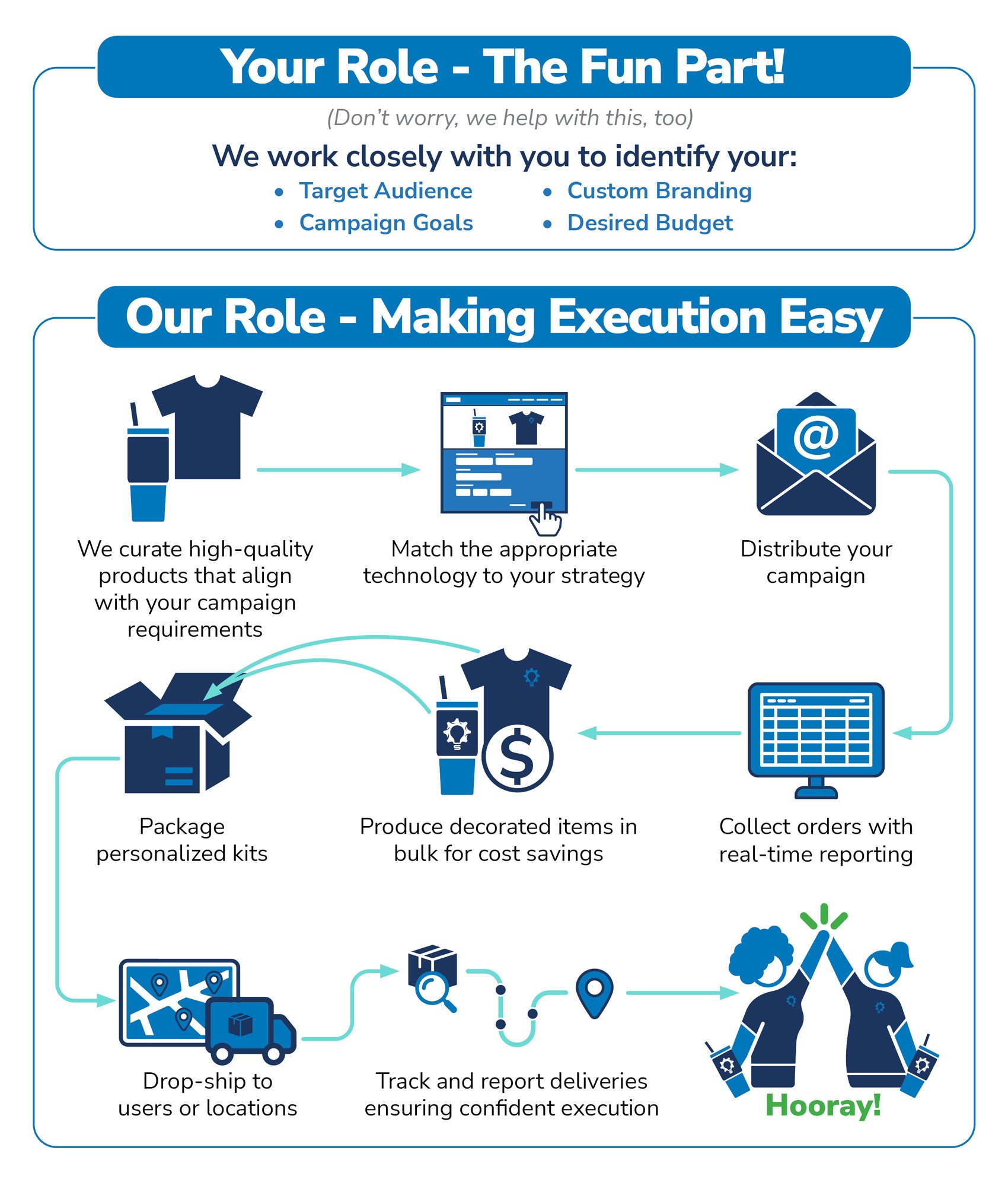
Once the strategy is established, someone still needs to manage the details. Symphonix helps organizations turn an approved employee gifting budget into a coordinated program.
Our Collection Campaign process can include:
- Defining the audience and objective
- Curating products within the approved budget
- Creating a focused selection of comparable gifts
- Collecting employee choices, sizes, and colors
- Collecting delivery information
- Managing artwork and proofs
- Coordinating bulk production
- Assembling individual gift packages
- Shipping to employee homes or offices
- Tracking selections and deliveries
- Supporting exceptions and replacements
- Providing program reporting
This approach combines the economics of bulk purchasing with an individual employee experience.
HR maintains fair program rules. Marketing maintains the intended brand experience. Leadership can deliver a consistent message of appreciation. Employees receive a gift they helped select. The value isn't simply access to products. It's having one accountable partner coordinate the complete program.
Guides to Gift-Giving

There's more to a successful gifting program than choosing a product.
We've put together practical resources to help you plan your campaign, set your budget and avoid the most common gifting headaches.

Corporate Gift-Giving: The Basics
Boost employee engagement with thoughtful recognition. Learn why offering curated gift choices drives satisfaction and how we simplify the process.

Give the Gift of Choice
Simplify corporate holiday gifting with Symphonix. Offer personalized gift choices, easy ordering, and hassle-free delivery for happy, engaged teams.
Gift-Giving Mistakes & Best Practices
Explore five common mistakes people make when giving gifts and offer five essential considerations to enhance your gifting strategy.
Plan an Employee Gift That Feels Like Appreciation
The best employee appreciation gifts aren't necessarily the newest, most expensive, or most heavily branded. They're useful, fair, thoughtfully selected, and well presented. They account for individual preferences without creating an unmanageable program. They arrive with a sincere message and are delivered when promised.
Most importantly, they complement the recognition employees receive throughout the year rather than attempting to replace fair compensation, good management, or a healthy employee experience.
Whether your organization is recognizing 25 employees or coordinating gifts across hundreds of locations, Symphonix can help you create a thoughtful program that fits your people and your budget.

Talk with Symphonix about your employee appreciation gifting program.
FAQ
How does a collection campaign work for employee appreciation gifts?
Can we set different budgets for different employee levels or locations?
What reporting do we get once the campaign closes?
How does split shipping work for remote or multi-location teams?
Each employee provides their own delivery address during the selection process, whether that's a home address, a regional office, or a distribution hub. Symphonix ships individually to each address rather than requiring a single bulk delivery point, so remote and multi-location employees are included the same way as employees at headquarters.
What's the minimum group size for a collection campaign?
Collection campaigns work for groups as small as 25 employees up through workforces spread across hundreds of locations. Smaller groups may have fewer product options at a given price point; the underlying process, budget control, choice, and reporting, stays the same regardless of size.